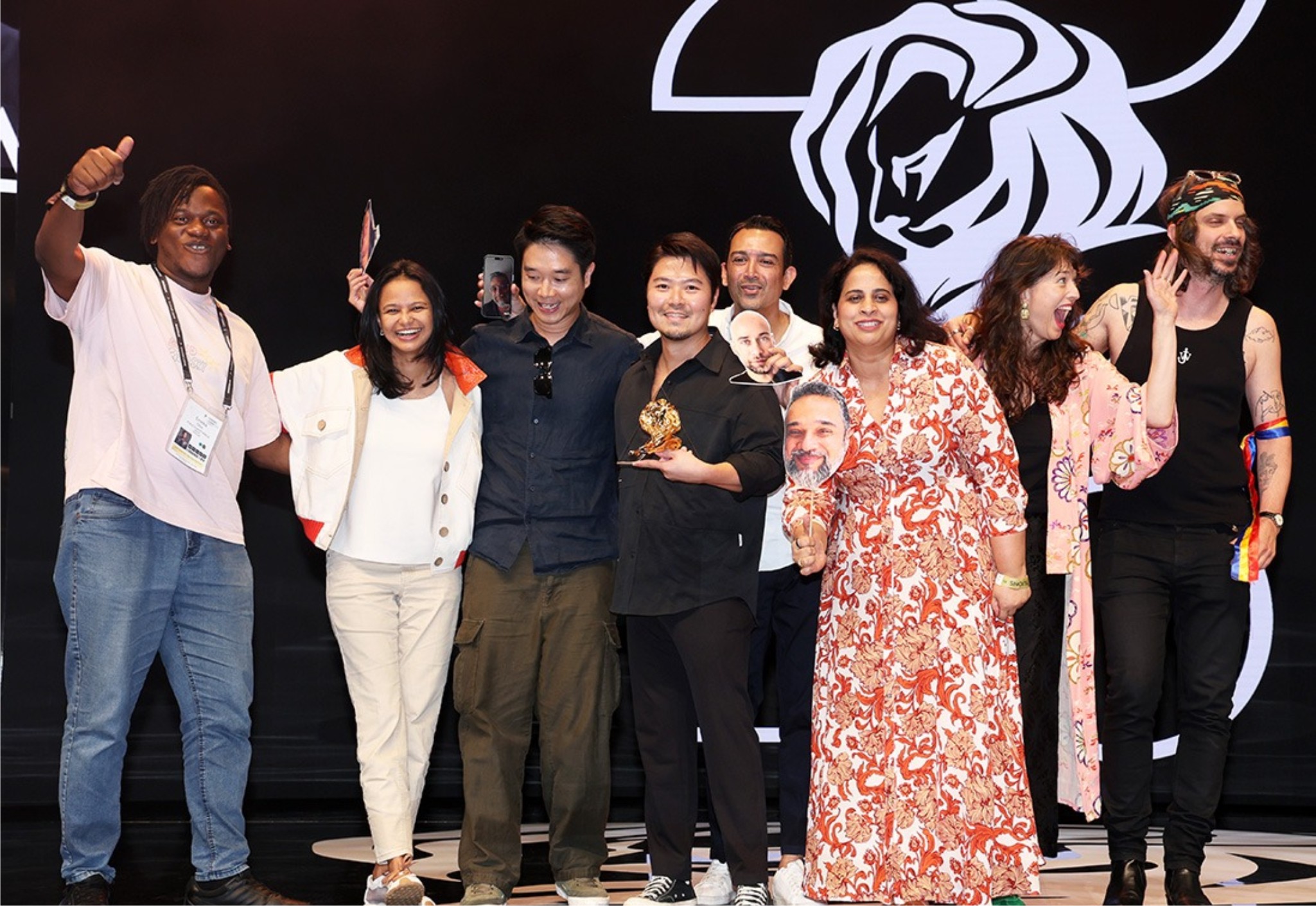
On a stage in Cannes where billion-dollar budgets and global production houses usually dominate, a story about a “Nigerian Prince” took home 1 Gold Lion and 4 Bronze Lions.
The campaign, Vaseline and The Real Nigerian Prince, was led by Leo Singapore, with regional support and collaboration from Publicis West Africa and other Publicis Groupe partners. Helping shape that regional contribution was Emeka Obia, Regional Head of Strategy for Central and West Africa at Publicis West Africa.
For Obia, the win was never about chasing trophies. It was about proving a point: that African strategy, when rooted in culture and discipline, doesn’t just participate in global conversations. It can shape them.
Out-Thinking, Not Out-Spending:
Cannes Lions is advertising’s Olympics. The briefs are bigger. The budgets are heavier. The competition is ruthless. So how did a campaign built around trust, counterfeit skincare, and a decades-old internet stereotype break through?
“Clarity,” Obia said. “It did not try to outspend global brands. It out-thought the problem.”
The insight was disarmingly simple. The world already knew the “Nigerian Prince” email scam. In Nigeria, consumers also knew another kind of scam: fake Vaseline in the market. Two forms of fakery. One human problem: trust.
Instead of decorating the culture, the team used it as a way into the problem. “Culture was not just a reference point,” Obia explained, “It became the strategy.”
That decision made the work travel. Specific enough to feel true to Nigeria. Human enough for a jury in Cannes to understand instantly.
It is the kind of thinking Obia has championed at Publicis West Africa: strategy that starts with how people actually live, not how decks say they should.
The Insight: When Fake Becomes Normal, Real Gets Questioned:
As Regional Head of Strategy, Obia’s role was to help validate the insight behind the work and sharpen how it connected to the Nigerian market reality. “The thought was simple: when fake things appear often enough, even the real begins to get questioned,” he said. “That was true of the ‘Nigerian Prince’ stereotype, and it was also true of counterfeit products in the market.”
So the campaign connected two kinds of fakery. Fake emails. Fake products. From there, Vaseline had a credible role: to help people know what is real. It wasn’t a manufactured purpose. In skincare, counterfeiting is not just a business loss.
It’s a safety issue. “People want to trust what they buy, especially in categories that touch the body and skin,” Obia noted. “The campaign made that trust issue visible in a way people could immediately understand.”
That is Obia’s signature as a strategist. He hunts for cultural tensions that sit on top of real consumer truths. Then he makes the brand’s role impossible to ignore.
West Africa and the New Standard:
The Cannes win does more than add metal to a shelf. It signals a shift in how the world sees African agency talent.
“For me, it says African strategic and creative talent is not just aspiring to join global conversations. We are already contributing to them,” Obia said.
Markets like Lagos, Accra and Abidjan force a different kind of intelligence. “They force you to understand how people actually make decisions, how trust is built, how aspiration works, and how informal systems shape brand choices,” he explained.
That market intelligence is now an export. The campaign was Leo Singapore-led, with Publicis West Africa helping ground the work in market reality and cultural understanding. Insight Redefini’s All Seasons Zenith and Quadrant MSL added media and PR muscle.
The result is a blueprint: global craft, regional collaboration and local truth can create world-class work.
For Publicis West Africa, the Lion is validation. “It shows that the region can help shape work that competes at the highest level when cultural intelligence, strategic discipline and creative ambition come together,” Obia stated.
Purpose That Didn’t Feel Forced:
Award-winning purpose campaigns often fail because they feel bolted on. This one didn’t. “The purpose was not forced onto the brand.
It came directly from the product problem,” Obia says. Counterfeit Vaseline is a trust issue, a protection issue, and potentially a health issue.
The “Nigerian Prince” stereotype gave the campaign a familiar entry point. The strategy flipped it. From fraud to authenticity. From suspicion to protection. “That, for me, is the sweet spot: specific enough to feel true to Nigeria, but human enough for anyone to understand,” he said.
It is also a lesson for brands across West Africa. Purpose works when it is the byproduct of solving a real business problem, not the starting point.
Beyond Data: The Bet on Cultural Intuition:
We live in an age of data dashboards. But Obia argued data only gets you halfway. “Data can show you that counterfeiting is a real issue, that trust matters,” he added. “But data alone does not always tell you how to make people care.”
The strategic bet was cultural. The easy choice was to avoid the “Nigerian Prince” stereotype entirely. The braver choice was to confront it, flip it, and use it to tell a story of protection without reinforcing harm.
“That required cultural intuition, nuance and respect for context,” Obia stated. “Strategy has to go beyond data. It has to understand feeling, memory, context, and risk.”
It is that willingness to make a judgment call that separates good strategy from great.
Three Lessons for the Next Cannes Winner from Nigeria:
Nigerian brands and agencies often ask: how do we compete globally with smaller budgets? Obia has three answers from the Vaseline process.
Firstly, he said, start with a real problem, not an award. “The strongest work usually comes from a problem that has genuine tension in it: a business problem, a consumer problem, or a cultural problem people can recognise.”
Secondly, bring clients into the standard early. Many clients want Lion-winning work but haven’t seen what it demands. “Show them the kind of work that wins, explain why it works, and help them understand the level of clarity, bravery and craft required,” Obia opined.
Conclusively, make the brand role simple. According to him, “Layered ideas are fine. But the brand’s job must be clear. “What is the brand helping people see, feel, do or trust differently?” he queried.
And underneath all three: collaboration. “Work of this standard is rarely built by one person or one department. It takes clients, strategists, creatives, production, media, PR and market teams aligning around the same ambition.”
Raising the Bar:
A Cannes Lion is not just a moment of recognition. It is a new standard to live up to.
For Publicis West Africa, it’s proof of capability. For Obia personally, it’s a filter for the work he wants next.
“I’m more interested in briefs where the work has something meaningful to solve, not just something to say,” he said. “Problems where culture is not just used to make the work look interesting, but to solve something meaningful: trust, behaviour, adoption, relevance, growth.”
The conversation with clients is also shifting. “The ambition cannot just be ‘let’s make a nice campaign.’ It has to be sharper: what is the real problem we are solving, what truth are we building from, and what role can the brand credibly play?”
His larger bet: globally competitive work doesn’t start with bigger budgets. “It starts with better briefs, braver conversations, stronger collaboration, and a higher standard for thinking.”
The Ambition That Keeps Him Up:
Obia is not interested in one-off wins. He wants a legacy of stronger work from the region.
“The ambition is to help build a body of work from this region that proves African strategy is not just culturally rich, but commercially and socially powerful,” he opined.
He is drawn to problems around trust, access, everyday behaviour, and dignity. In food and drink, health, finance, education, informal trade, and youth culture.
“Africa has some of the most complex consumer realities in the world. If we can solve it here, we can teach the world something,” he said
Obia wants Publicis West Africa to be known for work that “turns deep cultural understanding into brand and business impact. Not just beautiful campaigns. Not just clever ideas. Work that changes how people think, choose, and adopt.”
Building the System, Not Just the Trophy:
Cannes celebrates bold ideas. But Obia knows the real win is consistency.
“The real challenge is not one Lion. It is building the muscle to consistently produce work that can compete anywhere,” he stated.
At Publicis West Africa, that means training. Young strategists are given room to own their thinking, not just fill slides. The team drills case study reviews, cultural analysis, strategic writing, and creative interrogation.
“Insight is not a line in a deck. It is a way of seeing the world,” Obia says.
He also pushes for exposure to global standards without losing local confidence. “Cannes shows the level of craft and clarity required. But the goal is not to copy global work. The goal is to understand the standard and then bring our own truths to it.”
For Obia, that responsibility also extends beyond the agency. He is passionate about helping expose the next generation of African marketers, creatives and strategists to the standards, conversations and opportunities that can shape their growth. “Talent is everywhere in this region,” he said. “But exposure is not always evenly distributed. Part of the work now is to help more young people see what is possible, understand the standard, and believe that their context can be an advantage, not a limitation.”
That is how occasional wins become a system.
Why This Matters for West African Advertising:
For years, West African creativity was seen as vibrant but “local.” The Vaseline win punctures that.
It proves three things, he said. “Cultural specificity scales. A Nigerian stereotype became a universal story about trust.”
Second, he stated that “Collaboration works. Leo Singapore led the idea, Publicis West Africa helped ground the regional and market context, while All Seasons Zenith handled media and Quadrant MSL handled PR and influencer engagement. The model is replicable.”
Lastly, “Strategy is the advantage. In markets where budgets can’t compete, thinking can,” he said.
For young creatives, marketers and strategists in Lagos, Accra, Dakar and across the region, the message is clear: your context is not a limitation. It is your edge. But the work now is to create more access, more exposure and more opportunities for that talent to meet the world at the highest standard.
As Obia puts it: “When we bring market intelligence, cultural understanding, strategic discipline, and creative ambition to the table, this region can shape work that wins anywhere. The bar is higher now. And in West Africa, that is the opportunity.”