 Across communities in Nigeria, thousands of women rise each day to open their small provision shops, arrange merchandise, attend to customers and make sales, often with the hope of earning enough to meet their families’ needs and keep their businesses running. For these women, many of whom operate within the informal retail sector, their modest shops are more than just places of trade; they are sources of livelihood, instruments of economic independence and a means of contributing meaningfully to their households and communities.
Through their daily efforts, they provide convenient access to essential consumer goods, build relationships with customers and sustain the flow of commerce within their neighbourhoods. However, behind their resilience, determination and entrepreneurial spirit lie persistent challenges that often constrain their growth. Limited access to capital, inadequate business-management skills, insufficient training and the absence of structured mentorship and business-development support make it difficult for many to expand their operations, increase profitability and build sustainable enterprises.
For some, the struggle is not a lack of ambition or willingness to work, but the absence of the opportunities and resources needed to translate their hard work into meaningful economic progress. Their contribution, however, is often overshadowed by the limitations they face and the relatively little attention given to strengthening their businesses.
Recognising both the economic importance of these women and the need to address the barriers limiting their entrepreneurial potential, Nestlé Nigeria PLC took a deliberate step towards supporting their growth and improving their livelihoods.
In August 2021, the company launched its Empowering Rural Women Initiative, an intervention designed to provide women retailers with the practical business knowledge, resources and guidance required to build stronger and more sustainable enterprises. The initiative was founded on the understanding that empowering a woman with the right tools to grow her business can have a ripple effect on her family, her community and the wider economy.
What began with 50 female retailers in communities around Abuja has since evolved into a nationwide intervention, reaching hundreds of women across different parts of Nigeria. Through a combination of business training, product support and mentorship, Nestlé Nigeria is helping these women move beyond the daily struggle of keeping their shops operational to building businesses with greater capacity, improved management practices and better prospects for long-term growth. It is a recognition that when women are given the opportunity, resources and support to thrive, the benefits extend far beyond their individual businesses.
MORE THAN GRANTS: AN INVESTMENT IN SUSTAINABLE BUSINESSES
The initiative was conceived with an understanding that sustainable business growth requires more than financial assistance. Women running small retail outlets need the right resources, practical knowledge and continued guidance to turn business opportunities into lasting success.
Consequently, Nestlé adopted an integrated empowerment model built around three major pillars: product grants, business training and mentorship. Under the programme, selected women receive Nestlé products valued at up to three times their existing stock or monthly sales, depending on the programme structure, alongside practical training and three months of mentorship.
Since its launch, the initiative has expanded across several communities and regions, including the South-East, North-East, South-South and South-West. From 50 beneficiaries in 2021, the programme had reached 332 women by the end of 2023 and 382 by the end of 2024. Its expansion to Agbara, Ogun State, and subsequently Zaria, Kaduna State, further demonstrated its commitment to reaching more women and strengthening businesses at the grassroots.
CHANGING THE ECONOMIC STORIES OF ORDINARY WOMEN
For the ordinary rural woman, the value of this intervention goes beyond receiving additional merchandise. It represents an opportunity to move from running a small shop with limited inventory to operating a more organised, profitable and sustainable enterprise.
Access to additional stock means beneficiaries can offer more products, serve more customers and reduce the likelihood of losing sales because essential items are unavailable. With increased business activity comes the potential for improved turnover, higher earnings and greater capacity to reinvest profits.
Equally important is the knowledge acquired through the training component. Participants learn bookkeeping, merchandising, stock management, financial management and customer service. These skills help them understand their business costs, monitor sales, distinguish revenue from profit and make better decisions about purchasing and reinvestment.
The benefits can extend directly into their households. Improved business income can strengthen women’s ability to contribute to food, education, healthcare and other family needs. It can also increase their confidence, financial independence and participation in household decisions. For women who have traditionally operated at the margins of formal economic opportunities, such progress represents an important step towards greater economic security.
Beyond individual households, stronger women-owned businesses contribute to local development by improving access to everyday consumer products, supporting community commerce and sustaining economic activities in underserved locations.
WHY EMPOWERING RURAL WOMEN MATTERS TO NESTLÉ
While the social benefits are significant, the initiative also reflects a strategic business philosophy for Nestlé Nigeria. Women account for approximately 60 per cent of the company’s retail network. They are therefore not simply recipients of corporate support; they are important business partners who help connect the company’s products with consumers across communities.
Speaking at the Zaria edition, Boladale Odunlami, Commercial Manager, Nestlé Nigeria, highlighted the importance of recognising and strengthening this relationship. He explained that the women contribute significantly to the company’s operations by reaching consumers, building trust and keeping its retail network active.
The initiative reflects Nestlé’s Creating Shared Value philosophy, which recognises that business success and societal progress can reinforce one another. When women retailers improve their business capabilities, they become better positioned to grow their earnings and support their families. At the same time, Nestlé benefits from stronger retail relationships, improved product availability and a more resilient distribution network.
It is an approach that moves beyond conventional corporate philanthropy by linking community development with sustainable business growth.
EVIDENCE OF PROGRESS: FIVE YEARS OF MEASURABLE IMPACT
The programme’s progress is reflected in its growing number of beneficiaries and the results recorded among previous participants. According to Nestlé’s monitoring, more than 80 per cent of women from earlier cohorts have sustained and grown their businesses beyond the initial stock support.
Many now operate with larger inventories, higher turnover, more customers and improved financial and business-management practices. These outcomes suggest that combining product support with practical knowledge and mentorship can help small retailers move towards more sustainable operations.
The experience also highlights an important lesson about empowerment: providing resources is only the beginning. Ensuring that beneficiaries understand how to manage those resources, make sound decisions and reinvest their earnings is what creates the possibility of lasting change.
ZARIA: CELEBRATING FIVE YEARS AND OPENING NEW OPPORTUNITIES
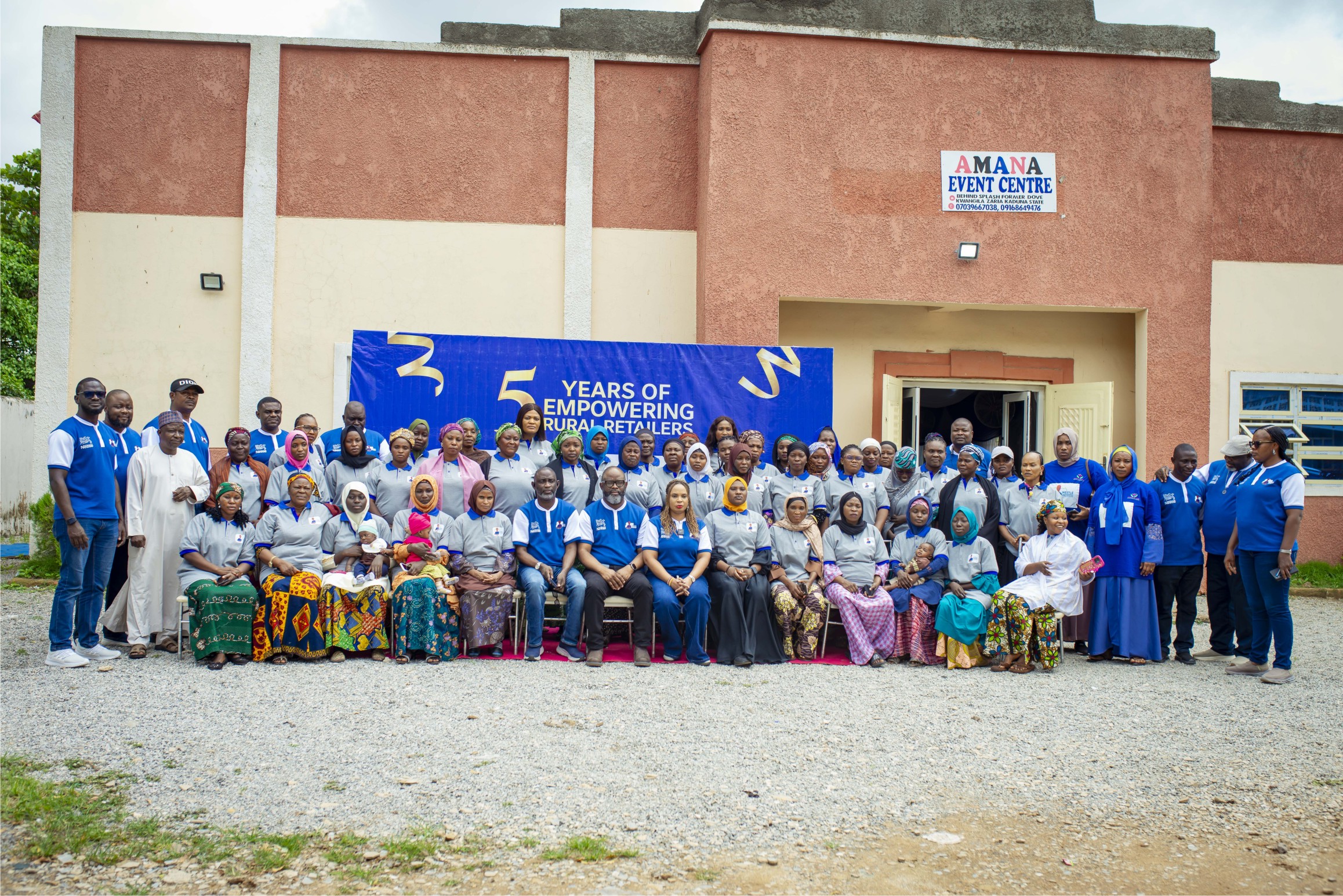
The fifth anniversary and 10th edition of the initiative in Zaria, Kaduna State, provided another opportunity to extend this impact. Nestlé Nigeria supported 50 women retailers with practical business training and product grants valued at three times their existing stock, bringing the programme’s total reach to 482 women since its launch.
The Zaria edition also marked the beginning of a three-month mentorship period during which the participants will receive guidance on applying their training, managing increased inventory and reinvesting profits to support continued business growth.
The training covered bookkeeping, merchandising, stock management, financial management and customer service. Participants were also encouraged to learn from one another and establish relationships that could provide support beyond the formal mentorship period.
Reflecting on the programme’s five-year journey, Victoria Uwadoka, Corporate Communications, Public Affairs and Sustainability Lead, Nestlé Nigeria, emphasised that the true measure of the initiative lies not in the support provided on the day, but in what the women go on to build with it.
Her observation captures the philosophy behind the programme: sustainable empowerment is measured by the businesses women can maintain, the opportunities they create and the improvements they make to their families’ livelihoods.
BUILDING A LEGACY BEYOND THE FIRST FIVE YEARS
As the Empowering Rural Women Initiative enters its next chapter, its journey offers an important example of how targeted investment in small businesses can generate benefits that extend beyond individual beneficiaries.
For the 482 women reached, the intervention represents access to opportunities that might otherwise have remained beyond their reach. For their families, it offers the prospect of improved financial security. For their communities, it supports stronger grassroots commerce. And for Nestlé Nigeria, it reinforces the value of building business relationships that grow alongside the people who sustain them.
Five years after its launch, the initiative demonstrates that empowering women is not simply about giving them the means to do more; it is about equipping them with the knowledge, resources and confidence to build something that lasts.
Most importantly, when a rural woman builds a stronger business, she does more than increase her stock or improve her sales. She strengthens her household, contributes to her community and creates a better foundation for the future. That explains the bigger story behind Nestlé Nigeria’s investment in rural women: when women grow, families grow, communities prosper and businesses create shared value.