Water is life, but for many Nigerian communities, accessing safe and reliable drinking water remains an everyday struggle. For families, the challenge often means walking considerable distances in search of water. For children, it can mean interrupted schooling and exposure to waterborne diseases. For women, who frequently bear the responsibility of providing water for their households, it represents additional physical and economic burdens.
Against this backdrop, Nestlé Nigeria Plc’s Water Regeneration Project is emerging as an important intervention in the country’s efforts to improve access to safe water and strengthen environmental sustainability. Its significance, however, extends beyond the installation of boreholes. It seeks to address the interconnected challenges of water availability, quality, conservation and community governance.
A COMMITMENT WITH DEEP ROOTS
Nestlé’s involvement in water stewardship in Nigeria did not begin with the latest regeneration project. The company’s documented activities go back to at least 2011, when it outlined plans to introduce Project WET (Water Education for Teachers), an international water education programme designed to teach children about conservation and responsible water management. By 2013, the programme had commenced classroom implementation in Lagos State, reaching thousands of pupils and teachers.
The company’s community water interventions subsequently expanded. In 2016, Nestlé Waters commissioned its Abaji facility in the Federal Capital Territory, complementing its existing operations in Agbara, Ogun State. Its community engagement included providing free drinking water access, while earlier interventions in Korogboji, Agbara, and later Maderegi, Abaji, demonstrated the company’s growing attention to the water needs of communities around its operations.
The present Water Regeneration Project builds on this history but adopts a broader, more integrated approach. On July 4, 2025, the Federal Ministry of Water Resources and Sanitation announced its collaboration with Nestlé Nigeria on water quality management and long-term water rehabilitation, identifying 16 communities in Abaji and eight in Agbara as beneficiaries. The initiative brings infrastructure, conservation, water safety education and community participation into one coordinated framework.
BEYOND INFRASTRUCTURE: WHAT COMMUNITIES STAND TO GAIN
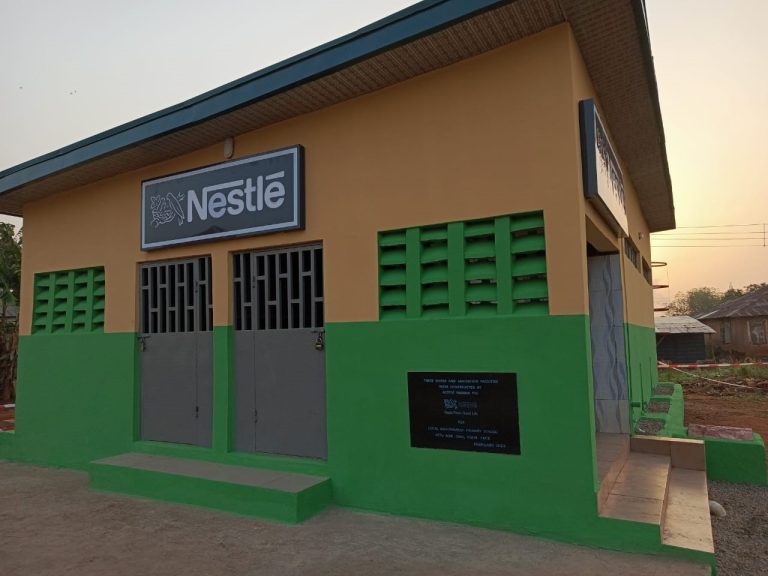
The latest milestone is particularly significant. Nestlé Nigeria has commissioned eight climate-smart boreholes and water treatment plants in communities within the Agbara catchment in Ogun State. These facilities represent part of a wider programme covering 24 boreholes: eight in Agbara and 16 in Abaji.
For beneficiary communities, the implications are considerable. Improved access to safe water can reduce the time and resources households spend searching for reliable sources, support better personal hygiene and sanitation, and contribute to healthier living conditions. Children can benefit from improved access to water at home and in their communities, while families and local businesses gain a more dependable resource for everyday activities.
The project’s four pillars give the intervention additional significance. Water Access provides the physical infrastructure; Water Quality introduces treatment facilities, routine monitoring and safety education; Water Conservation incorporates rainwater harvesting systems; while Water Governance establishes community Water, Sanitation and Hygiene (WASH) committees to oversee the facilities.
These committees are particularly important. Boreholes can be commissioned, but their long-term usefulness depends on proper maintenance, accountability and timely repairs. By equipping community representatives with governance training and clearly defined responsibilities, Nestlé is encouraging beneficiaries to become active custodians rather than passive recipients of development projects.
The initiative also supports two farming communities through water-harvesting interventions for irrigation, potentially improving agricultural resilience and contributing to local food security.
WHAT IT MEANS FOR NESTLÉ NIGERIA
For Nestlé, the project represents an important intersection between corporate sustainability, responsible water management and business continuity.
Water is essential to communities, ecosystems and the company’s beverage operations. Consequently, protecting local water resources is not simply an act of corporate goodwill; it is also a strategic investment in the environmental and social conditions that sustain its operations.
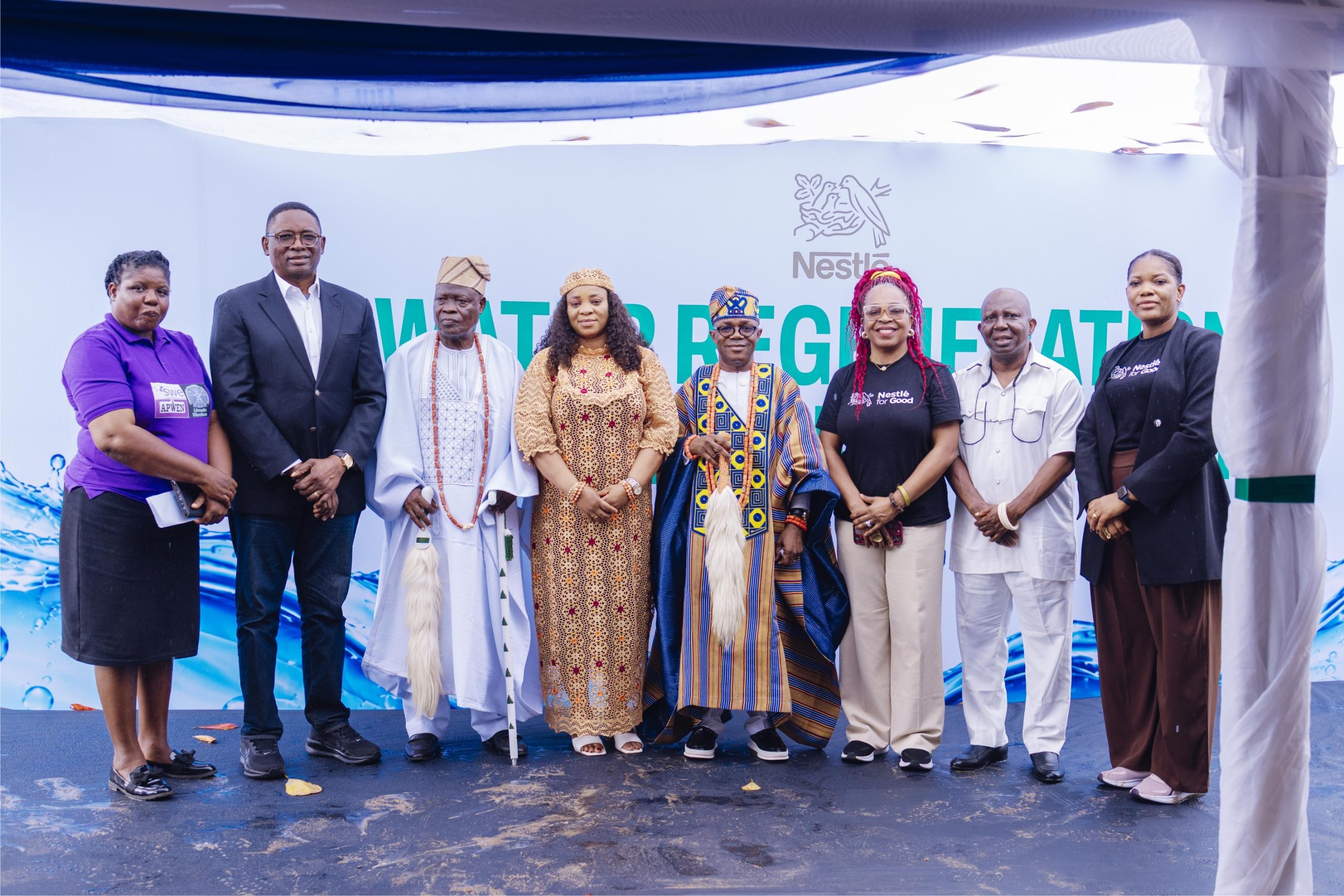
Speaking at the commissioning of eight climate-smart boreholes and water treatment plants recently, Olutayo Olatunji, Business Executive Officer, Nestlé Waters and Premium Beverages, Nestlé Nigeria Plc, explained the company’s thinking.
“The Agbara commissioning is an important milestone within our wider Water Regeneration Project and reflects Nestlé’s commitment to helping regenerate local water cycles. By combining treated water infrastructure with local governance and performance monitoring, we are creating a model that improves access, strengthens watershed resilience and delivers enduring value,” he said.
His remarks capture the project’s central philosophy: corporate growth and community wellbeing should reinforce one another. By investing in water availability, quality and stewardship around its operational catchments, Nestlé strengthens its relationship with host communities while contributing to the resilience of the watersheds on which its activities depend.
A SHARED RESPONSIBILITY FOR NATIONAL DEVELOPMENT
The initiative also demonstrates the value of public-private partnerships in addressing Nigeria’s development challenges.
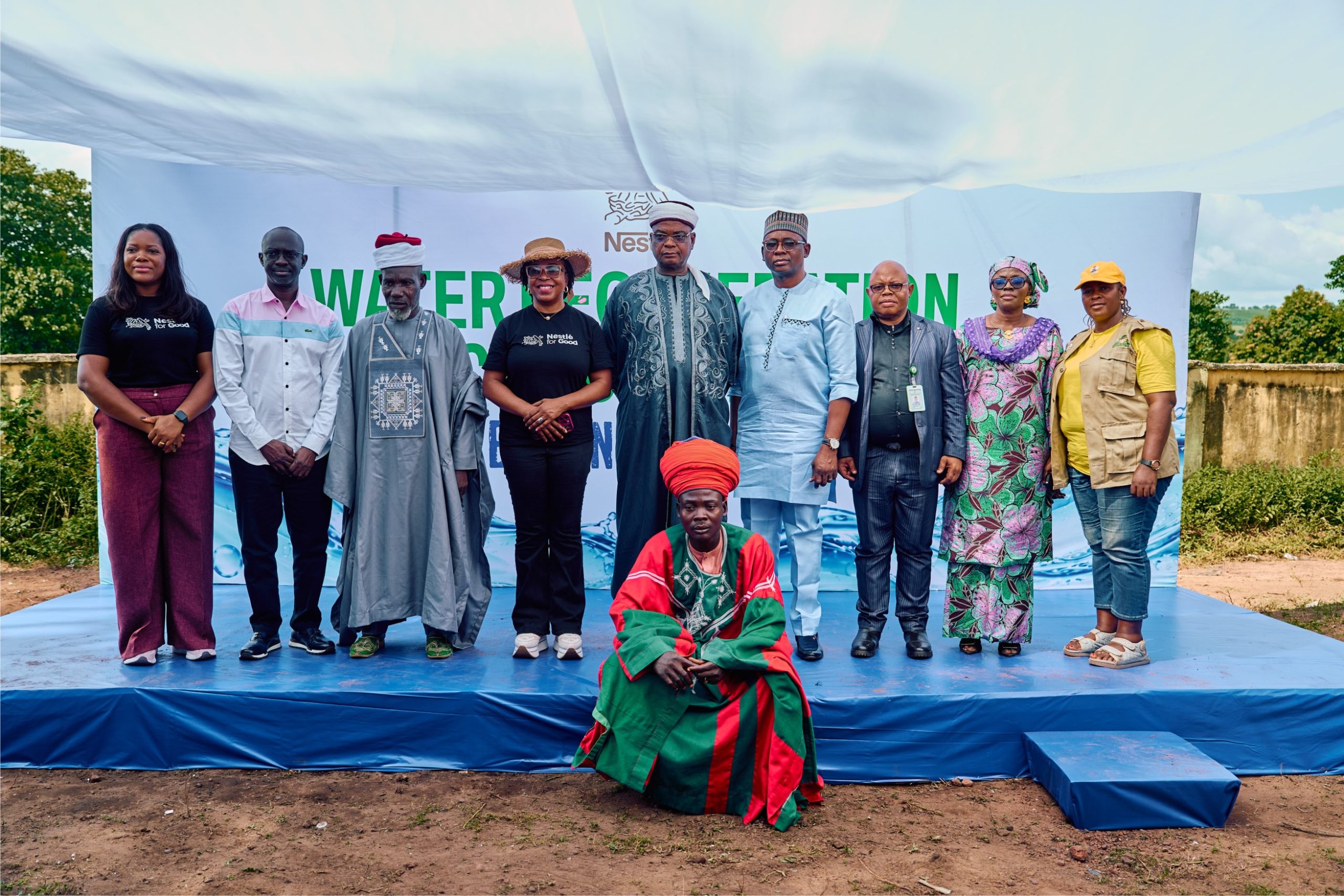
The Honourable Minister of Environment, Balarabe Abbas Lawal, described the project as evidence of what strategic collaboration can achieve, noting that it advances Sustainable Development Goal 6, which seeks to ensure availability and sustainable management of water and sanitation for all.
Similarly, the Honourable Minister of Water Resources and Sanitation, Engr. Prof. Joseph Terlumun Utsev, emphasised that commissioning infrastructure is only the beginning. According to him, the real measure of success is its continued ability to provide safe, reliable and sustainable services. He welcomed the project’s emphasis on governance training and water stewardship.
Beyond the immediate beneficiaries, the wider Nigerian citizenry stands to gain from stronger water safety awareness. Through the National Water Quality Advocacy Campaign and the National Water Quality Handbook developed with the Federal Ministry of Water Resources and Sanitation and the Organised Private Sector in Water, Sanitation and Hygiene (OPS-WASH), the initiative seeks to extend practical water safety knowledge into homes, schools, communities and institutions.
Victoria Uwadoka, Corporate Communications, Public Affairs and Sustainability Lead, Nestlé Nigeria Plc, captured this responsibility when she said: “Access alone is not enough. Water must be safe, it must be protected, and communities must have the knowledge to manage it responsibly.”
THE FUTURE: FROM ACCESS TO LASTING IMPACT
Perhaps the most compelling measure of the project’s success will not be the number of boreholes commissioned, but how many continue to deliver safe water years after their inauguration.
As the remaining facilities in Abaji are completed and handed over, community participation, transparent monitoring, preventive maintenance and effective governance will be essential. Government agencies, traditional institutions, technical partners and residents must sustain the collaboration that has brought the project this far.
For His Royal Majesty, Oba (Barr.) Lukman Jayeola Agunbiade, Olute III, the Alagbara of Agbara Kingdom, the intervention carries a generational responsibility. He described the development as a day of gratitude, stressing that the community had received more than boreholes: it had received a responsibility to protect the facilities for future generations.
THE PROJECT’S LEGACY.
Nigeria’s water challenges cannot be resolved by infrastructure alone. They require investment, effective regulation, environmental responsibility, public education and communities willing and equipped to protect shared resources.
By bringing these elements together, Nestlé Nigeria is advancing a model that seeks to make water access more sustainable and community-led. The real victory will be when safe water becomes an everyday certainty rather than a daily struggle for families in Agbara, Abaji and other underserved communities.
The greatest value of water regeneration is not simply the water delivered today, but the healthier, more resilient and more hopeful communities it helps create tomorrow.