…as KWASU wins AIC 4.0 Creative Pitch
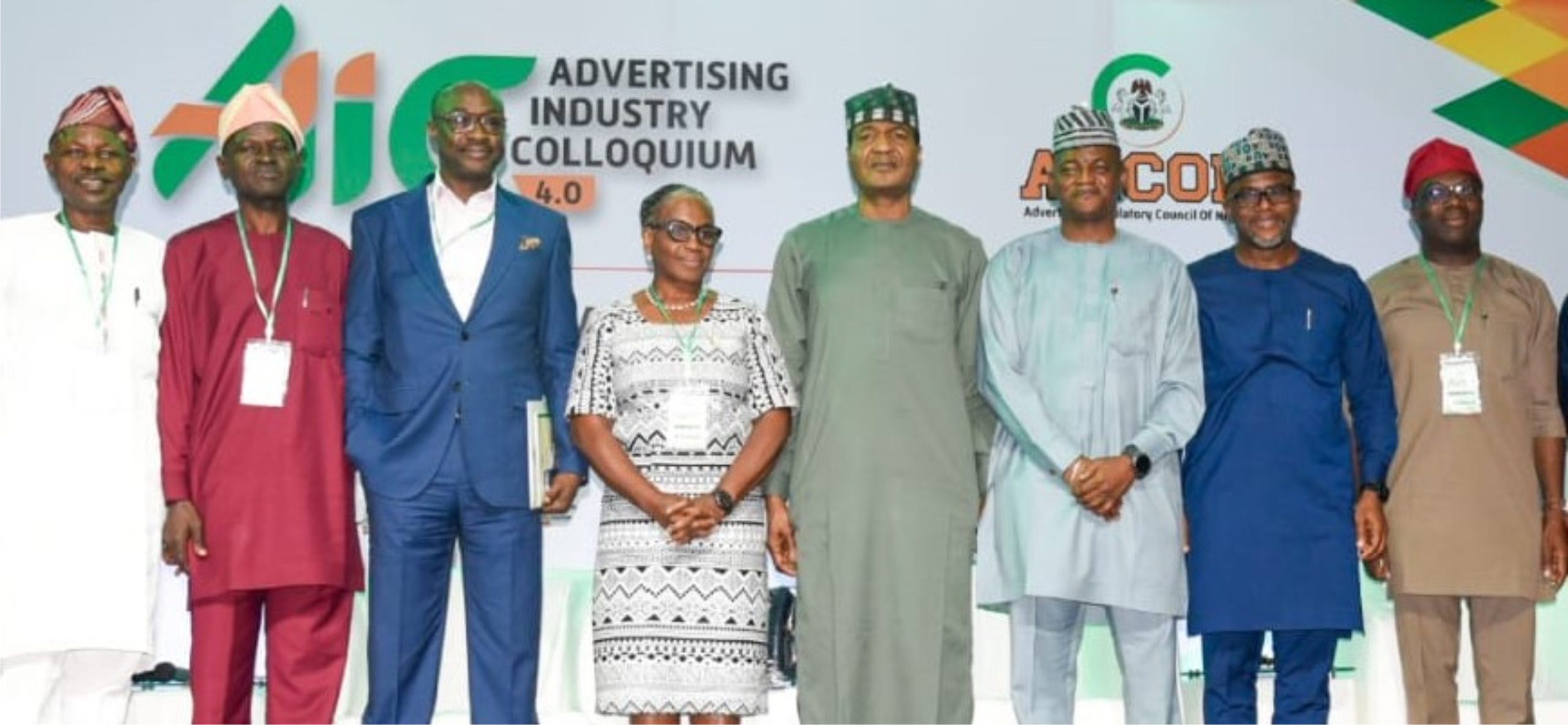
The Advertising Regulatory Council of Nigeria (ARCON) and key stakeholders in the advertising industry have called for stronger collaboration among regulators, practitioners, technology companies, media organisations, academia and consumers to drive innovation and ensure the sustainable growth of Nigeria’s advertising industry.
The call was made at the fourth edition of the Advertising Industry Colloquium (AIC 4.0), which brought together advertising professionals, regulators, brand owners, media executives, technology experts, academics and students to deliberate on the forces reshaping the industry and how Nigeria can harness emerging opportunities.
Held on Thursday at the D’Podium Event Centre, Ikeja, Lagos, the colloquium was themed “The Future of Advertising: Role of Platforms, People and Regulation.”
The event focused on the impact of digital platforms, Artificial Intelligence (AI), human capital, ethical practice, consumer engagement and regulation on the future direction of Nigeria’s marketing and communications industry.
Speaking at the event, the Chief Host, Minister of Information and National Orientation, Alhaji Mohammed Idris, represented by the Director-General of Voice of Nigeria, Mallam Jibrin Ndace, described the theme as timely, noting that rapid technological developments were fundamentally changing how brands communicate and how consumers interact with information.
Idris said technologies such as AI, digital platforms, big data and immersive technologies were redefining brand communication, consumer behaviour and the way societies receive information.
“For Nigeria, this development presents enormous opportunities as well as significant responsibilities. Advertising has evolved far beyond selling products; it now influences culture, shapes public perception, drives economic activity, promotes national identity and supports democratic participation.
“In an increasingly digital world, regulation must therefore keep pace with innovation without stifling creativity,” he said.
According to the minister, the future of advertising would be shaped by three critical pillars; platforms, people and regulation.
He noted that digital platforms had fundamentally transformed how information is created, distributed and consumed, describing them as tools that had democratised communication while also creating concerns around misinformation, harmful content, privacy, data protection and market fairness.
“Government believes that digital innovation must be accompanied by responsible governance that protects consumers while encouraging enterprise,” he said.
On the role of human talent in the evolving industry, Idris said technology should complement rather than replace human creativity, ethics and professional judgment.
“Technology will never replace human creativity, ethics and strategic thinking. Artificial Intelligence may generate content, but authentic storytelling, cultural understanding, emotional intelligence and professional judgment remain uniquely human,” he said.
He described Nigeria’s youthful population as a major asset in the global creative economy, stressing the need for investment in education, digital literacy, innovation and creative entrepreneurship.
“Our responsibility is to equip them with the skills required to compete globally through investments in education, digital literacy, innovation and creative entrepreneurship,” he added.
The minister also stressed the importance of effective regulation, arguing that it should serve as an enabler of sustainable industry development rather than an obstacle to growth.
“Effective regulation is not an obstacle to growth; it is the foundation for sustainable development. A predictable, transparent and forward-looking regulatory framework builds investor confidence, protects consumers and promotes fair competition,” he stated.
He further linked advertising and communication to the broader national development agenda, noting that the National Orientation campaign promotes patriotism, civic responsibility, social cohesion and values necessary for national development.
According to him, communication must be deployed to build trust, encourage dialogue and strengthen the relationship between government and citizens.
“This is why partnerships with the advertising and media industries remain indispensable. Together, we can build campaigns that not only market products but also promote public health, national unity, environmental sustainability, financial inclusion, education and responsible citizenship,” he said.
Idris urged industry stakeholders to embrace innovation without compromising ethics and public trust.
“Together, we can position Nigeria as Africa’s leading hub for responsible advertising, creative excellence and digital innovation,” he said.
Advertising’s future requires collective action — Fadolapo
The Director-General of ARCON, Dr. Olalekan Fadolapo, said the AIC had continued to provide an important platform for thought leaders, regulators, practitioners, academics and emerging professionals to exchange ideas on the future of advertising and marketing communications in Nigeria.
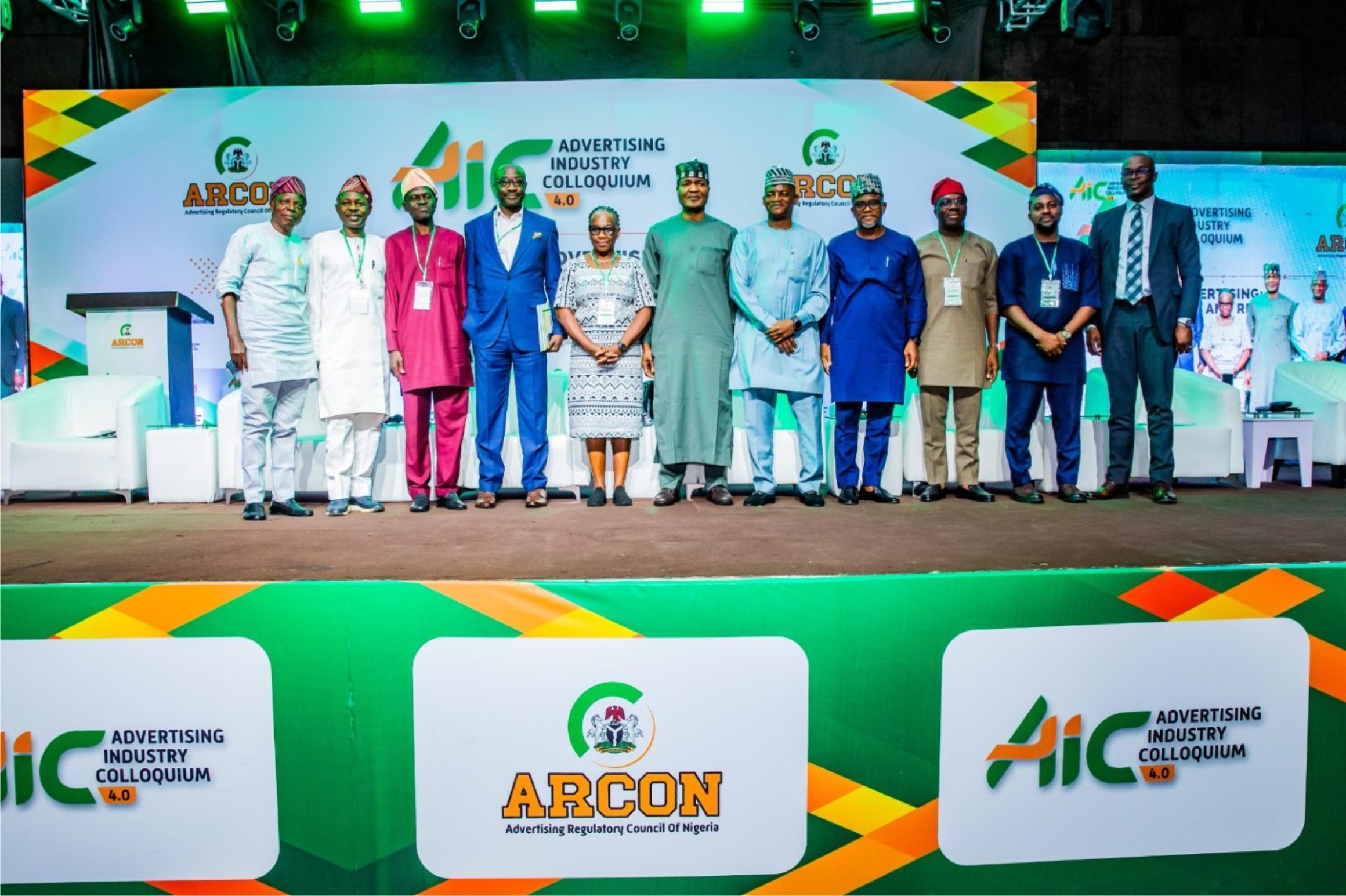 Fadolapo said the theme reflected both the opportunities and responsibilities accompanying the rapid transformation of the industry.
“As technology reshapes communication and digital platforms continue to influence consumer engagement, the need for responsible innovation, professional excellence and effective regulation has never been more critical,” he said.
He stressed that no single stakeholder could determine the future of the advertising industry.
“The future of advertising cannot be shaped by one stakeholder alone. It requires collaboration that inspires innovation, stakeholders who drive creativity and ethical practice, and a regulatory framework that promotes trust, protects consumers and supports sustainable industry growth,” he stated.
AI, personalisation, creator economy to reshape advertising — Akanmu
The keynote speaker, Mr. Olu Akanmu, Director of the Tech-leap Initiative at Lagos Business School, represented by Professor Rotimi Olatunji, described the colloquium as a timely and consequential intervention for the advertising and marketing communications industry.
Speaking on the challenges confronting stakeholders, Akanmu said regulators must move beyond simply ensuring compliance with existing advertising codes and begin anticipating technological developments that could outpace legislation.
“For regulators, the challenge is no longer merely ensuring compliance with advertising codes; it is anticipating technological change that often outpaces legislation,” he said.
For practitioners, he said success would increasingly depend on the ability to integrate creativity, technology, ethics and data analytics.
He added that scholars must develop new theories capable of explaining an advertising ecosystem increasingly influenced by artificial intelligence, behavioural economics, platform capitalism and digital governance.
Consumers, he noted, were also changing rapidly, increasingly moving away from traditional interruption-based advertising towards interactive, immersive and experience-driven communication.
Akanmu identified AI, personalised advertising and the continued expansion of the creator economy as some of the major trends that would shape the future of advertising.
He also described trust as one of the industry’s most valuable assets, arguing that consumers would increasingly reward authenticity.
He called on platform owners to strengthen transparency around advertising algorithms and collaborate with national regulators while complying with local advertising laws. He also recommended independent audits of advertising systems to improve accountability.
Akanmu urged consumer advocacy organisations to intensify their monitoring of advertising ethics and truthfulness, promote consumer education and media literacy, protect vulnerable populations and advocate responsible digital advertising.
He also called on academia to rethink existing curricula by placing greater emphasis on Generative AI, data analytics and audience intelligence, platform economics, digital governance, computational advertising and algorithmic accountability.
He further recommended the adoption of a co-regulatory approach involving government, industry, platform owners, civil society, academia, consumer organisations, technology companies and relevant international organisations.
AIC theme builds on previous editions — Olatunji
The Chairman of the AIC and Journal Committee, Prof. Olatunji, said the theme of the fourth edition represented a natural progression from the intellectual discussions initiated during the previous three editions of the colloquium.
“Over the past three editions, the Colloquium has explored changing trends in advertising education and practice, the transformative impact of emerging technologies and the convergence of storytelling, human engagement and data-driven communication,” he said.
He said the latest edition focused on how digital platforms, human creativity and responsive regulation could work together to build an advertising and marketing communications industry that is innovative, ethical and globally competitive.
Various industry associations also contributed to the discussions, including the Association of Advertising Agencies of Nigeria (AAAN), Out-of-Home Advertising Association of Nigeria (OAAN), Media Independent Practitioners Association of Nigeria (MIPAN), Broadcasting Association of Nigeria (BON), Experiential Marketers’ Association of Nigeria (EXMAN) and Electronic Media Content Owners Association of Nigeria (EMCOAN).
The associations shared perspectives on how stakeholders could collectively respond to technological, regulatory and consumer-driven changes within the advertising ecosystem.
KWASU wins AIC Creative Pitch
A major highlight of the colloquium was the annual Creative Pitch competition, which featured presentations by teams from five higher institutions representing different geographical zones of the country.
Kwara State University emerged winner, while the University of Ilorin, Kwara State, came second. Rivers State University, Rivers State, finished third, followed by Kaduna State University in fourth position and Lagos State University, Ojo, in fifth place.
Kwara State University received N1 million as the overall winner, while the University of Ilorin received N750,000 for second place.
Rivers State University received N500,000 for third place, while Kaduna State University and Lagos State University each received N250,000.
The competition further highlighted the importance of developing young creative talent and equipping students with the skills required to navigate an advertising industry increasingly driven by technology, data, creativity and innovation.