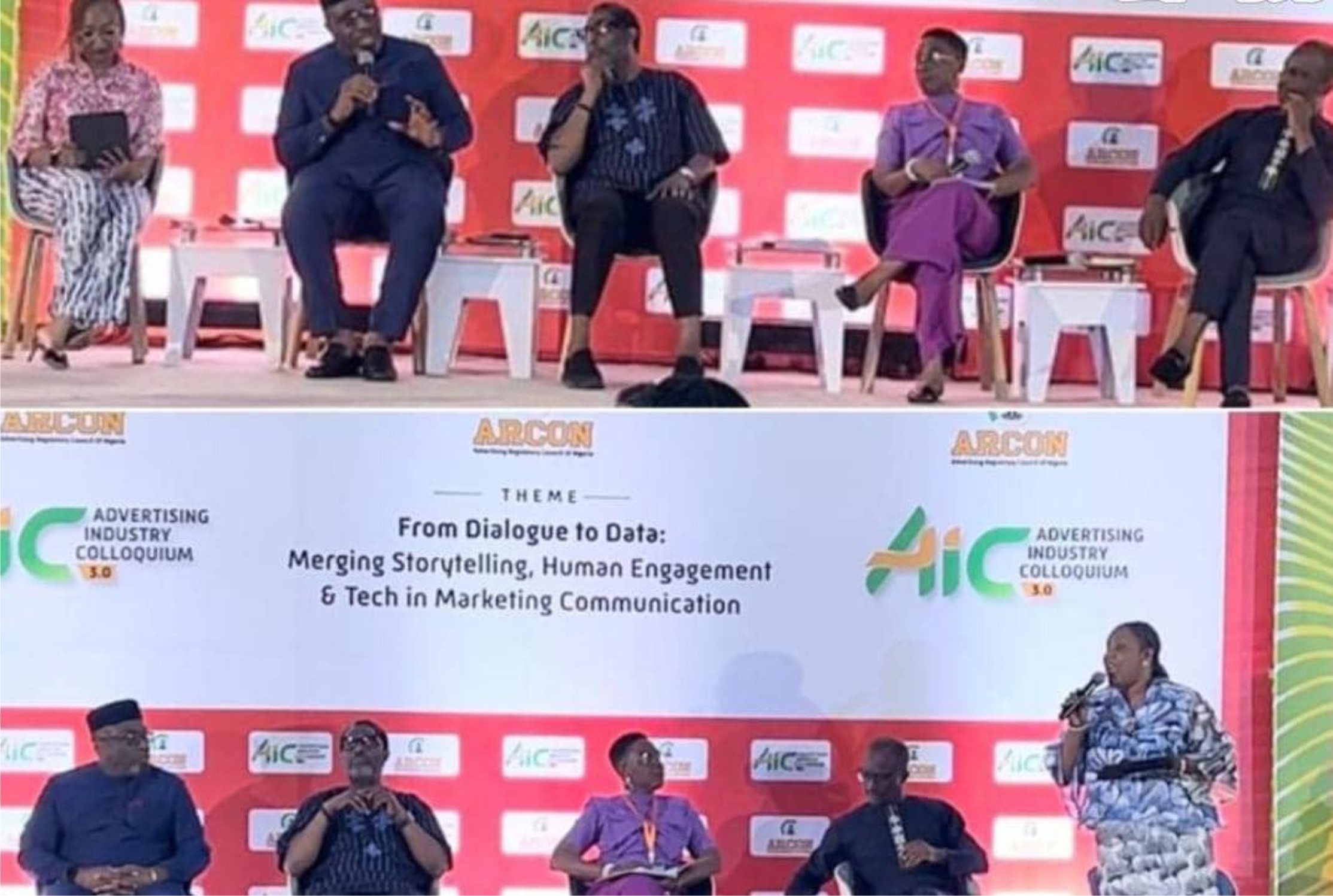
Industry leaders at the third edition of the Advertising Industry Colloquium (AIC 3.0) have called for a fundamental shift in marketing education and practice, urging institutions and professionals to adapt to a fast-changing landscape powered by technology, storytelling, and cultural authenticity.
The event held at the Sheba Event Centre, Mobolaji Bank-Anthony Way, Lagos, themed “From Dialogue to Data: Merging Storytelling, Human Engagement & Tech in Marketing Communication.”
It featured a panel of six distinguished thought leaders from marketing, media, and academia, moderated by Hannah Oyebanjo, Managing Director of Redwood Consulting.
The panel session had Lanre Odufuwa, Head of Marketing at OmniRetail; Prof. Kolade Ajilore, Professor of Communication Studies at Babcock University; Idorenyen Enang, CEO of Corporate Shepard and Immediate Past President of the National Institute of Marketing of Nigeria (NIMN); Nana Milagrosa, Founder of MPXM Agency; Stephen Onaivi, Managing Director, mediaReach OMD; and Femi Odugbemi, Chief Executive Officer of Zuri24 Media.
Opening the session, Lanre Odufuwa emphasised the urgent need to prepare young marketers for a digital-first world. She highlighted the role of prompt engineering, AI literacy, and adaptability in shaping future professionals.
“In today’s world, people aren’t just building wealth; they are building tribes,” she said.
Odufuwa noted that while creators and influencers now dominate brand conversations, authenticity and relevance remain key to winning consumer trust. She called on educational institutions to combine hard digital skills with soft competencies like agility and creativity.
Idorenyen Enang took a deeper dive into the role of storytelling in today’s marketing ecosystem. He warned against the loss of authenticity in brand narratives and stressed that marketers must create culturally relevant and emotionally resonant stories.
“Too many brands are telling stories that are totally off the hook. “We must shift from a monologue to a dialogue model, actively listening to our audience,” he said.
He further noted that while data and automation have their place, emotional connection and insight-led storytelling are what truly resonate, referencing Coca-Cola’s iconic ad “I’d Like to Teach the World to Sing” as an enduring example.
Addressing the complexities of media planning in the AI era, Stephen Onaivi outlined three critical challenges: the need for a centralized data approach, difficulty in extracting meaningful insights, and the absence of regulatory clarity around AI in advertising.
He urged the next generation to take the lead in solving Africa’s unique challenges from within. “Our solutions cannot come from outside,” he said.
He highlighted the role of local context in AI applications and encouraging collaboration between tech experts and marketers.
Academic voice on the panel, Professor Kolade Ajilore, raised concern about the disconnect between classroom research and market realities. He described the current academic model as “mind-boggling” and proposed a more integrated approach using technology to make academic research more accessible and applicable to practitioners.
Ajilore shared ongoing initiatives, including mandated industry collaborations for lecturers and localized curriculum development, aimed at better preparing students for entrepreneurship and innovation in marketing.
Nana Milagrosa, who engaged the audience with live poll results during her session, revealed that emotional connection, personalization, and cultural reflection are top drivers of brand engagement and loyalty.
She said Nigerian consumers are most likely to share brand content when it features funny or emotionally relatable storylines, rather than perfection. “Campaigns that reflect reality flaws and all are what make people feel seen,” she noted, emphasizing that data must serve storytelling, not replace it.
Rounding off the discussions, keynote speaker Femi Odugbemi called on marketing professionals to document their journeys and case studies for the benefit of upcoming generations.
“There is a knowledge gap because our stories are not written,” he said.
Odugbemi emphasized the need for internship programs, mentorship, and case study publishing to ensure that theoretical learning is enriched by practical, lived experiences.
The consensus from AIC 3.0 was clear; marketing education must evolve beyond outdated models to incorporate technology, creativity, emotional intelligence, and cultural nuance. As storytelling continues to merge with data, and as AI reshapes the communication landscape, the next generation of marketers must be equipped to lead with empathy, relevance, and innovation.